

Want your business to grow? Innovation is the key. Companies that focus on innovation tend to do better and make more money than those that don’t.
By creating cool new products, making processes smoother, or finding new ways to earn money, businesses can stay ahead of the game.
Let’s dive into why innovation is so great, where it happens, what gets in the way, and how you can bring more of it to your company.
Why bother with innovation?
As business guru Peter Drucker once said, innovation is what entrepreneurship is all about. It’s how you create new value or make what you already have even better.
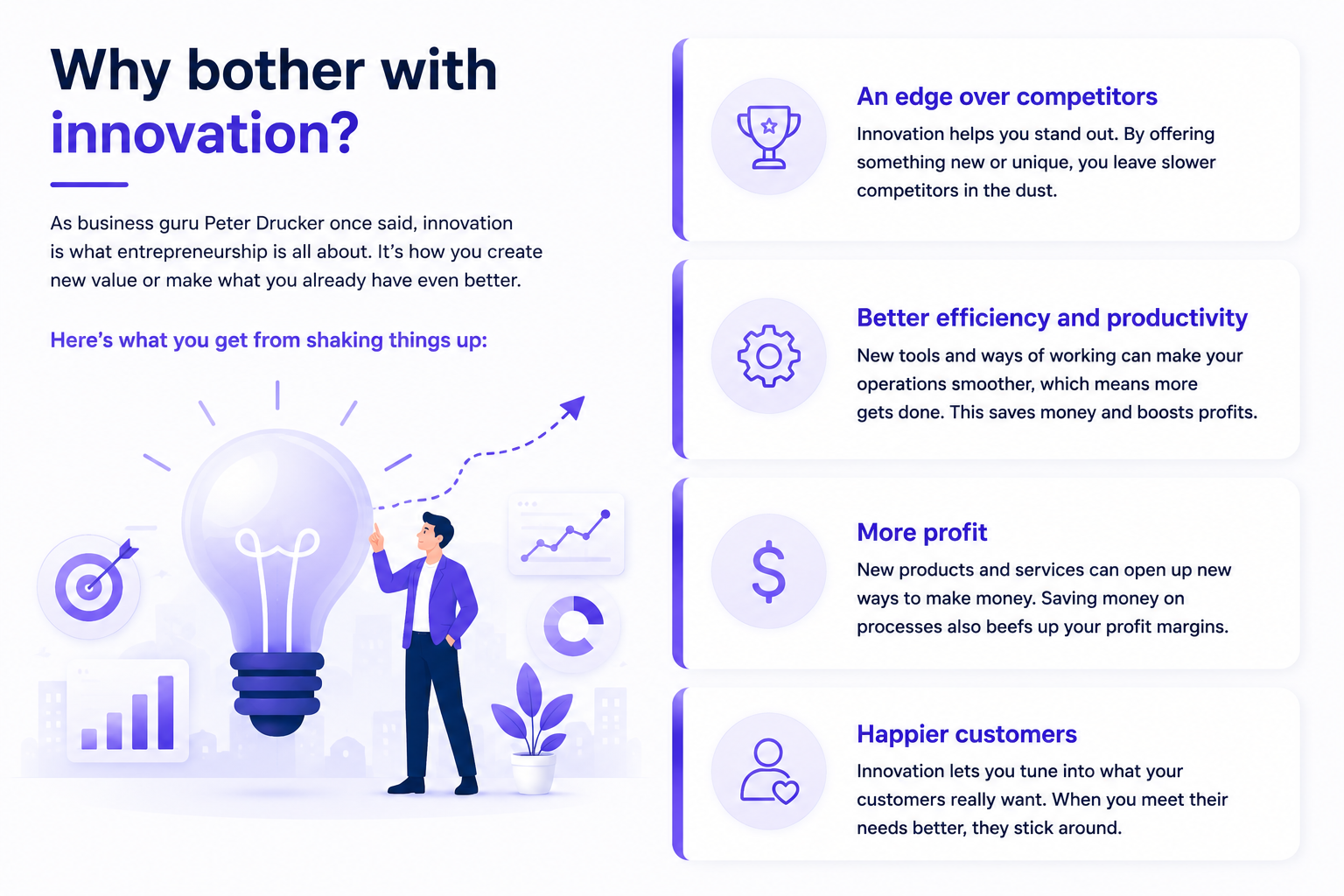
Here’s what you get from shaking things up:
- An edge over competitors: Innovation helps you stand out. By offering something new or unique, you leave slower competitors in the dust.
- Better efficiency and productivity: New tools and ways of working can make your operations smoother, which means more gets done. This saves money and boosts profits.
- More profit: New products and services can open up new ways to make money. Saving money on processes also beefs up your profit margins.
- Happier customers: Innovation lets you tune into what your customers really want. When you meet their needs better, they stick around.
Where does innovation happen?
Innovation isn’t just one thing; it comes in a few flavors:
- Incremental innovation: Making small, steady improvements to what you already have.
- Architectural innovation: Making a big change to a product to keep your spot in the market.
- Disruptive innovation: Introducing a new tech or business model that completely changes the game.
- Radical innovation: A huge technological leap that creates a whole new industry.
You can apply these ideas to almost any part of your business. Here are some popular spots:
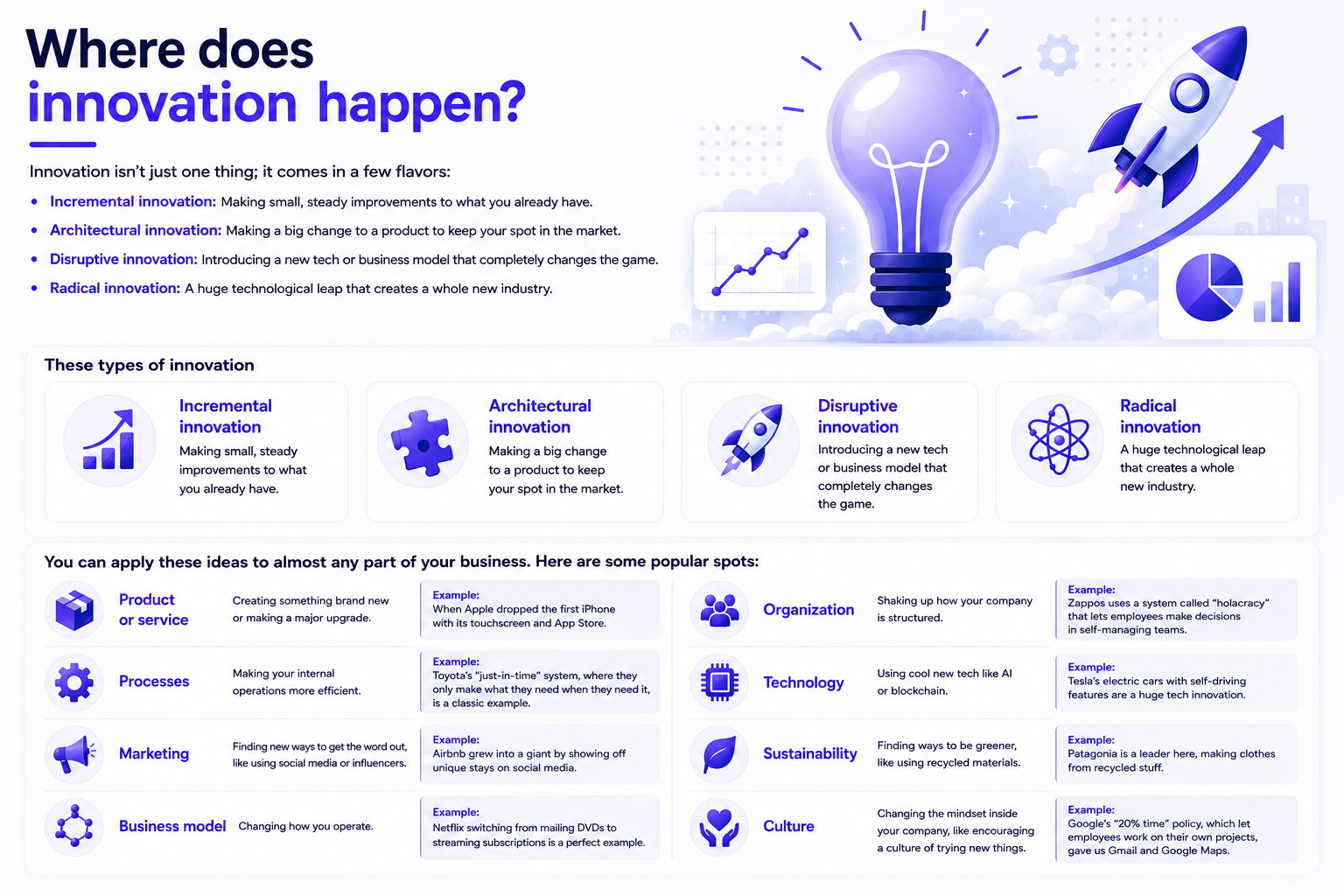
- Product or service: Creating something brand new or making a major upgrade. Think of when Apple dropped the first iPhone with its touchscreen and app store.
- Processes: Making your internal operations more efficient. Toyota’s “just-in-time” system, where they only make what they need when they need it, is a classic example.
- Marketing: Finding new ways to get the word out, like using social media or influencers. Airbnb grew into a giant by showing off unique stays on social media.
- Business model: Changing how you operate. Netflix switching from mailing DVDs to streaming subscriptions is a perfect example.
- Organization: Shaking up how your company is structured. Zappos uses a system called “holacracy” that lets employees make decisions in self-managing teams.
- Technology: Using cool new tech like AI or blockchain. Tesla’s electric cars with self-driving features are a huge tech innovation.
- Sustainability: Finding ways to be greener, like using recycled materials. Patagonia is a leader here, making clothes from recycled stuff.
- Culture: Changing the mindset inside your company, like encouraging a culture of trying new things. Google’s “20% time” policy, which let employees work on their own projects, gave us Gmail and Google Maps.
What stops innovation?
Even though it’s great, a few things can get in the way of innovation:
- Fear of change: People often don’t like new things. Employees and managers might push back against new ideas.
- Not enough resources: Innovation takes time and money, which can be tough, especially for smaller companies.
- Playing it safe: Businesses can be scared to bet on new ideas if they’re not sure they’ll pay off.
- Thinking short-term: Focusing only on what’s happening right now can stop you from investing in long-term growth.

How to get more innovation flowing
Want to pump up the innovation in your business? Try these tips:
- Build a culture of innovation: Encourage your team to share ideas and experiment. Celebrate the wins!
- Let people get creative: Give your employees the freedom and support to try new things and take smart risks.
- Invest in R&D: Set aside a budget to explore new technologies and ideas.
- Team up: Work with other companies, universities, or startups. It’s a great way to get fresh ideas and resources.