

The rise of remote work has accelerated digital transformation across many industries. Organizations once reliant on traditional office-based processes have had to modernize by adopting cloud computing, automation, and digital workflows.
This shift has not only enabled employees to work efficiently from various locations but has also improved business agility. To support this new way of working, companies are investing in AI, workflow automation, and advanced analytics to streamline operations and enhance decision-making.
Building a strong remote culture
A key challenge for remote organizations is maintaining a sense of community. In a traditional office, culture often develops organically through daily interactions. In a remote setting, companies must be more intentional about fostering engagement.
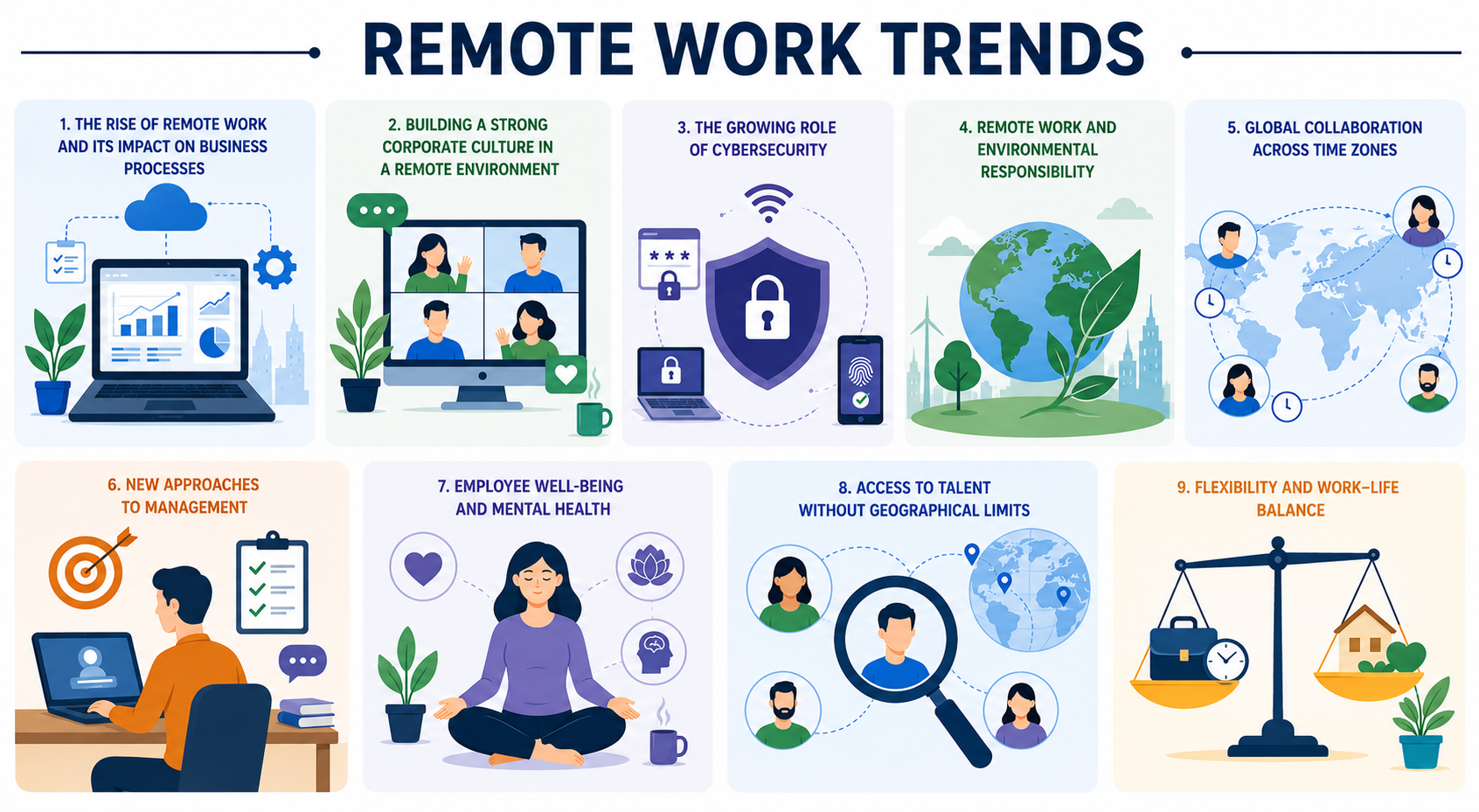
Virtual meetings, online social events, mentorship programs, and transparent communication can help strengthen team relationships. Organizations that successfully cultivate a strong remote culture often see higher employee satisfaction, better retention, and improved collaboration.
The growing importance of cybersecurity
With the expansion of remote work, cybersecurity has become a critical priority. Employees accessing company systems from home networks, personal devices, and public Wi-Fi can increase security risks. Cybercriminals are targeting remote workers with phishing, ransomware, and social engineering attacks.
To combat these threats, organizations are implementing multi-factor authentication, endpoint protection, continuous security monitoring, and cybersecurity training. Security is now a company-wide responsibility that requires ongoing awareness and education.
Remote work and environmental sustainability
The environmental benefits of remote work are also gaining attention. Fewer daily commutes can lead to lower carbon emissions and reduced traffic. A smaller office footprint also decreases energy consumption and waste.
While remote work isn’t entirely carbon-neutral, studies suggest that hybrid and remote models can support sustainability goals. As environmental responsibility becomes more important to businesses, remote work will likely play a role in achieving these targets.
Global collaboration across time zones
Remote work allows companies to build global teams, enabling employees from different countries and cultures to collaborate on projects. This diversity of perspectives can drive innovation and help organizations better understand international markets.
However, managing teams across multiple time zones requires careful planning. Businesses need clear communication protocols, asynchronous collaboration tools, and schedules that respect different working hours. When managed well, global collaboration can offer a significant competitive advantage.

New leadership styles
Remote work is shaking up how managers lead. It’s less about watching people in the office and more about trusting them to get the job done. Good remote managers set clear goals, give regular feedback, and focus on results.
They also make sure their team feels supported and connected. This shift helps create a more flexible and productive workplace.
Taking care of mental health
While working from home is flexible, it can also be tough. Some people feel lonely or find it hard to switch off from work. Because of this, many companies are offering more support, like access to mental health services and encouraging employees to set boundaries.
Things like flexible hours, required vacation time, and regular check-ins are becoming standard. Companies that look after their employees’ well-being tend to have happier, more engaged teams.
Hiring the best, no matter where they are
A huge plus of remote work is being able to hire people from all over the world. Companies aren’t stuck with local talent anymore. This helps them find the best people for the job, build diverse teams, and stay competitive. Hiring internationally can be complicated with taxes and laws, but companies that figure it out will have a big advantage.