

Customer trust is key to business growth. It’s often cheaper to retain existing customers than to acquire new ones, and increasing retention by just 5% can boost profits by 25% to 95%. This starts with trust.
This article will show you how to build customer trust to grow your business with loyal, returning customers.
What is customer trust?
Customer trust is the belief that you’ll deliver on your promises. It’s built over time through consistent actions like sending invoices on time, following up, and fixing mistakes quickly. Eventually, satisfied customers don’t just buy from you — they recommend you.
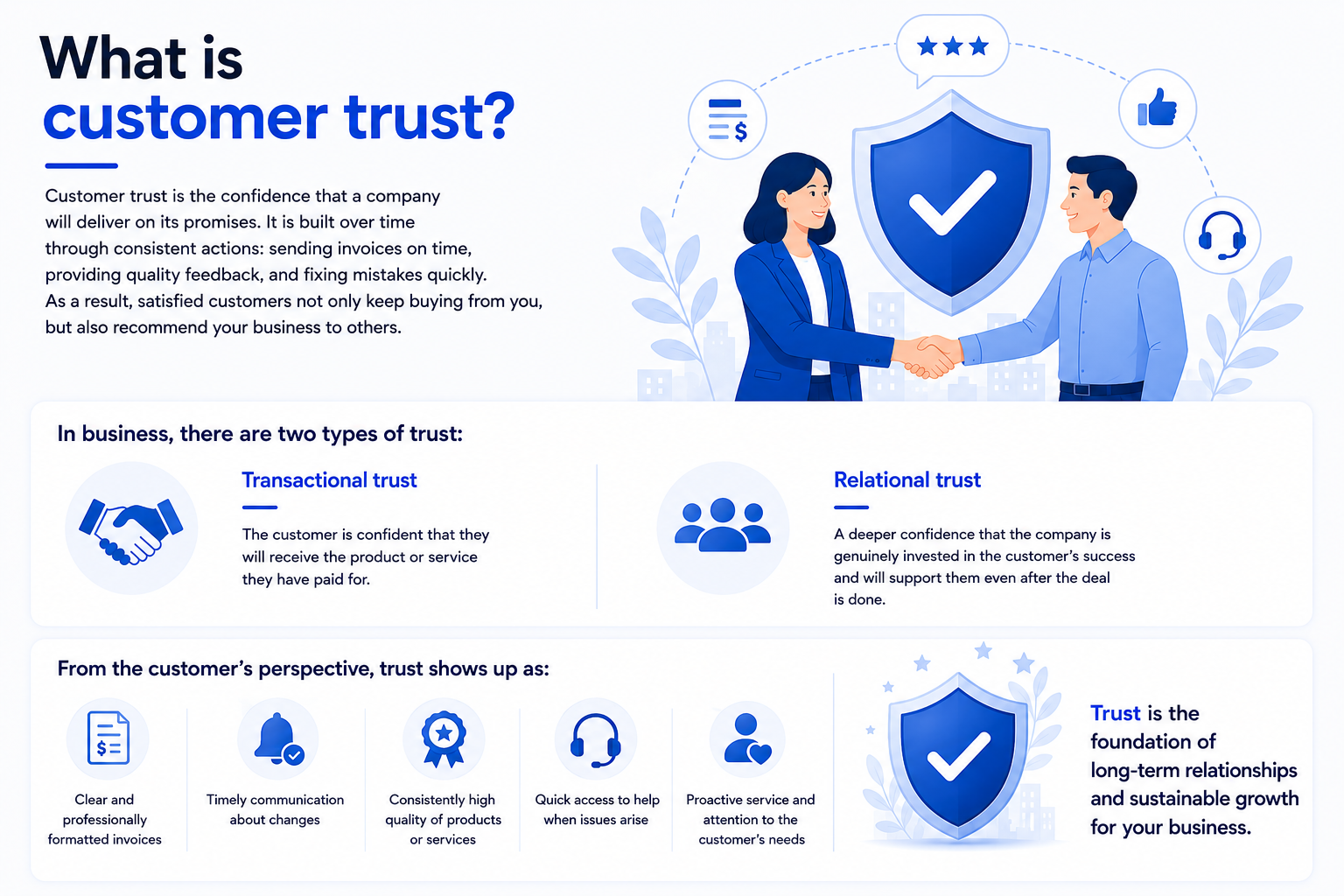
There are two types of business trust:
- Transactional trust: The client believes you’ll deliver the product or service.
- Relational trust: The deeper belief that you support their goals beyond the sale, not just for payment.
From a customer’s perspective, trust looks like:
- A clear, professional invoice.
- Timely communication about changes.
- Consistent quality.
- Access to real support when things go wrong.
- Proactive service.
Why is building customer trust important?
Building consumer trust leads to loyalty, a competitive edge, and faster growth. When people trust you, they return, tell their friends, and stick with you.
Trust fuels loyalty and organic growth
Most people try products based on trusted recommendations, which is vital for small businesses with limited marketing budgets:
- Customers are more likely to recommend a brand they trust.
- Loyal customers are 5x more likely to repurchase and 4x more likely to refer others.
- Referrals convert at 4x higher rates than leads from paid ads.
Earning trust early reduces customer acquisition costs and churn.
It’s a viable competitive edge
In crowded markets, trust is a unique differentiator. While competitors can copy prices or features, they can’t replicate how customers feel about your brand:
- Only 3% of consumers trust advertisers, but 74% trust companies they’ve bought from before.
- For 81% of people, trust is a top factor in buying decisions, often more so than price.
When customers are confident in your reliability, they stop looking for alternatives.
It supports smoother sales and faster growth
Trust helps you grow with less effort:
- Faster conversions: Trusted brands move prospects through the sales funnel more quickly.
- Greater resilience: Businesses with high trust better withstand negative reviews and market slumps.
- Better feedback: Trusting customers provide honest feedback, helping you improve faster.
Growing a business is about earning and keeping trust through consistency, clear communication, and simple tools.
How to gain customer trust for your business
Customer trust is earned through consistent actions. Here’s how to build it.
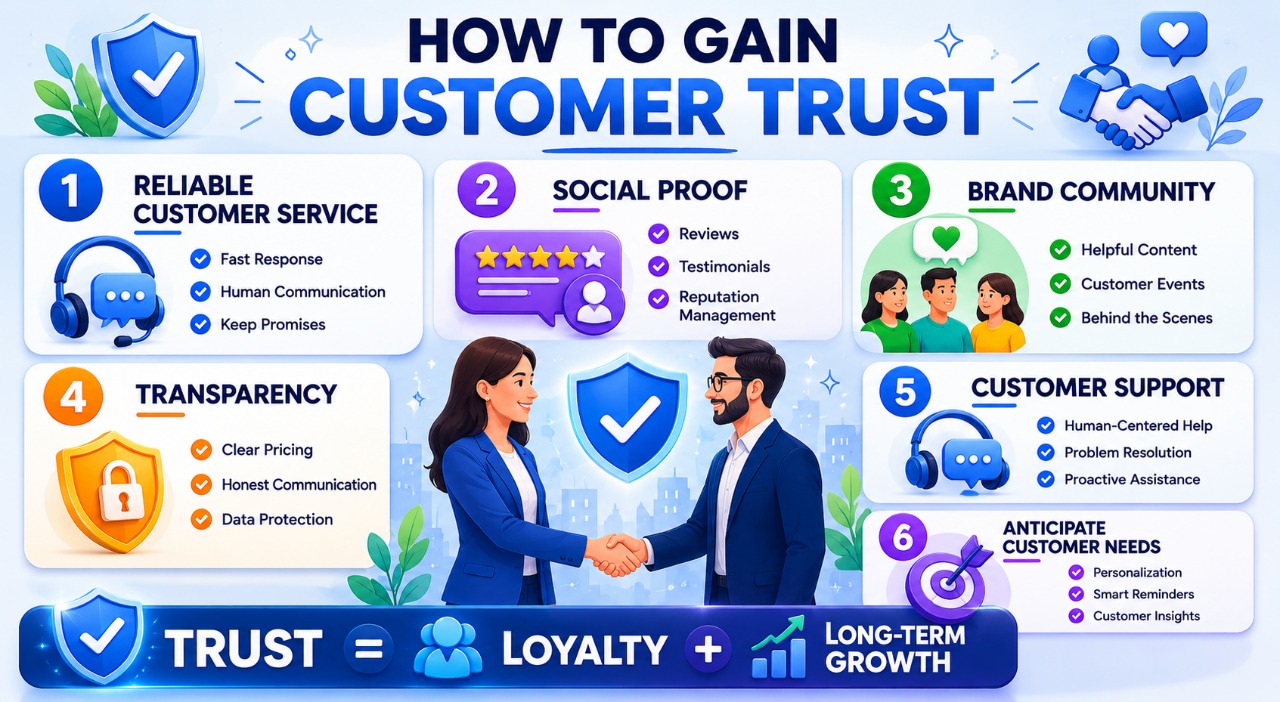
Offer consistent, reliable customer service
Nothing erodes trust faster than being ignored. McKinsey & Company research shows consumers expect fast responses:
- Respond quickly: Use tools with real-time notifications.
- Be human: Use a professional yet natural tone.
- Follow through: If you make a promise, keep it.
Share social proof and customer feedback
Most people check reviews before buying. A PwC survey found that 70% of consumers seek them out:
- Add testimonials to your website and marketing materials.
- Ask for a review immediately after a positive experience.
- Address bad reviews openly. Solving the issue can build more trust than hiding it.
Build your own brand community
Loyalty stems from a sense of belonging:
- Create helpful content, like tips or how-to guides.
- Host virtual check-ins to make customers feel valued.
- Show the behind-the-scenes of your work.

Practice integrity and transparency
Trust grows when nothing is hidden. Own your mistakes and communicate them quickly:
- List your prices clearly. Use a tool for transparent, itemized quotes.
- Admit when you don’t know something. Honesty is better than guessing.
- Be upfront about your capabilities and protect customer data.
Connect with customers who need support
How you handle problems is a critical trust-building moment:
- Make help feel human, even with automated systems.
- Offer workarounds or a clear plan if a problem arises.
- Be proactive. Use data to spot potential issues and check in.
Anticipate your customers’ needs
People trust you more when they feel you understand them:
- Track past behavior to personalize your service.
- Automate helpful nudges, like invoice reminders.
- Ask good questions upfront to deliver exactly what they need.
These small, consistent actions build and maintain trust. The right tools make it easier to deliver on your promises without adding to your workload.