
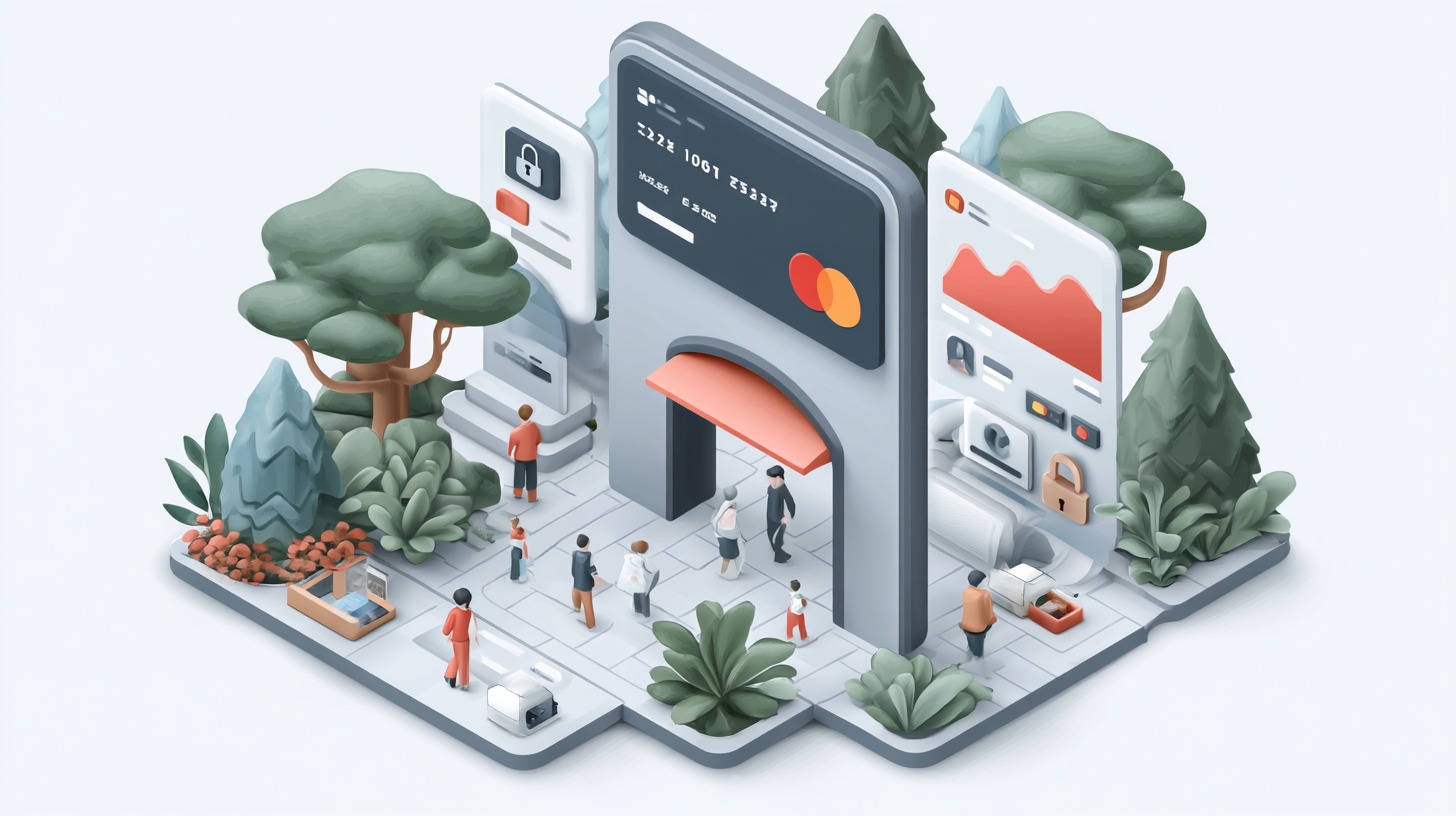
Digital payment methods have transformed how money moves between customers and businesses, making transactions faster, more convenient, and easier to manage. For companies looking to accept straightforward card transactions online, a 2d payment gateway can provide a practical way to process payments without relying on paper checks, manual confirmation, or physical cash. Customers can now complete purchases using a card, digital wallet, bank transfer, or mobile device in seconds.
Online payment gateways are a central part of this ecosystem. They provide the secure connection that allows payment information to travel between a customer, a merchant, a payment processor, a card network, and the customer’s bank. Gateways are used for online retail, subscriptions, mobile payments, invoices, marketplace transactions, and many other scenarios.
A modern gateway does more than transmit card details. Depending on the provider and the merchant’s risk settings, it may support multiple currencies, local payment methods, recurring billing, fraud screening, refunds, reporting, and automated reconciliation. Some businesses also look for a 2d payment gateway without OTP when they need a simplified checkout flow for eligible transactions, although the exact authentication requirements depend on the payment method, market, and applicable security rules.
Many providers also offer hosted checkout pages or prebuilt payment components, allowing businesses to launch secure payment flows without developing every feature from scratch.
Why are payment gateways important for your business?
Payment gateways influence revenue, customer trust, cash flow, and operational efficiency. A reliable solution reduces friction at checkout while helping a business control risk and manage transactions across different sales channels.
1. Faster transactions
Customers expect digital payments to feel almost instant. If a website or app takes too long to process a transaction, displays repeated loading screens, or fails to provide clear confirmation, buyers may abandon the purchase.
When comparing 2d payment gateway sites, businesses should look beyond advertised processing speed and assess real-world performance, uptime, response times, and stability during periods of high demand. A well-designed gateway quickly sends the authorization request, receives the issuer’s response, and displays the result.
Speed is especially important for mobile commerce, ticket sales, food delivery, and digital products. Businesses should also consider reliability during promotions and traffic spikes. Intelligent routing, automatic retries for eligible recurring payments, and useful error messages can reduce failed transactions.
2. Increased security
Customers need confidence that their financial information is protected. Reputable gateways use encrypted connections, secure infrastructure, access controls, monitoring tools, and recognized payment-industry practices to reduce exposure to fraud and data theft.
Tokenization provides another layer of protection. Instead of storing the customer’s actual card number in the merchant’s systems, the provider replaces it with a unique token. That token can be used for approved future payments but is far less useful if stolen. This can also reduce the amount of sensitive data a business handle directly.
Many gateways support advanced authentication for online card payments. Risk-based systems can allow low-risk purchases to continue smoothly while requesting additional verification when a transaction appears suspicious. Security remains a shared responsibility, however. Businesses still need strong passwords, multifactor authentication for staff, restricted permissions, secure API keys, software updates, and employee training.
3. Better user experience
Customers are more likely to complete a purchase when checkout is short, familiar, transparent, and adapted to their device. A strong gateway can support saved payment details, digital wallets, autofill, one-click options, and responsive payment forms.
Payment choice is equally important. Depending on the market, buyers may prefer cards, mobile wallets, instant bank payments, local transfer methods, or Buy Now, Pay Later services.
For businesses selling across borders, an international 2d payment gateway may also help support transactions in multiple regions while accommodating different currencies, customer preferences, and checkout expectations. Offering the most relevant options can improve conversion, particularly among international customers.
Adding every available method is not always the best approach. Too many choices can make checkout confusing. Businesses should prioritize methods according to customer location, device type, order value, product category, and actual transaction data.
4. Simplified operations
Modern gateways centralize transaction records, refunds, disputes, fees, payouts, and payment data in one dashboard. Integrations can connect payment activity with accounting software, inventory tools, customer relationship platforms, and enterprise systems.
Automated reconciliation helps finance teams match orders with payments and payouts, identify discrepancies, and prepare accurate reports. Analytics can reveal approval rates, failed-payment reasons, refund trends, chargebacks, popular payment methods, and sales by region.
Things to consider before choosing a payment gateway
Before selecting a provider, evaluate the complete cost, technical fit, customer experience, and ability to support future growth. Regional coverage is equally important, particularly for companies comparing market-specific options — whether that means a 2d payment gateway India solution, a payment platform for the UAE, a UK-focused processor, or a gateway designed for businesses operating in Singapore. Each market has its own banking infrastructure, currencies, settlement practices, customer preferences, and regulatory requirements.

1. Transaction charges
Pricing may include a percentage of each transaction, a fixed fee, monthly charges, currency conversion fees, dispute fees, refund fees, payout fees, or extra charges for certain payment methods.
The lowest advertised rate is not always the lowest total cost. A provider with better approval rates, stronger fraud tools, or more efficient reconciliation may create more value. Model costs using realistic order values, sales volume, refund rates, customer locations, and payment preferences.
2. Variety of payment methods
The gateway should support the methods customers actually use, including major cards, digital wallets, bank transfers, instant account-to-account payments, local methods, and suitable BNPL options.
Payment preferences differ by country and customer segment. Businesses should introduce methods strategically and confirm whether each one supports refunds, recurring payments, disputes, and the required settlement currency.
3. Security and compliance
A provider should follow recognized payment security standards and offer encryption, tokenization, fraud monitoring, secure authentication, and role-based access. When evaluating a 2d payment gateway for international payment, merchants should also examine how the provider handles cross-border data transfers, currency conversion, regional compliance requirements, and fraud risks across different markets.
Merchants must understand which responsibilities remain with them. A hosted checkout can reduce the amount of card data passing through the merchant’s environment, while a highly customized integration may create additional obligations. Data-retention policies, privacy controls, breach procedures, and independent assessments should also be reviewed.
4. Settlement times
Authorization does not mean that money is already available in the merchant’s bank account. After approval, a payment must be captured, cleared, settled, and paid out according to the provider’s schedule.
Timing can vary by payment method, country, risk profile, weekends, holidays, and account history. Providers may also hold reserves or delay some payouts. Businesses should understand payout schedules, minimum thresholds, reserve policies, and faster-settlement options.
5. Seamless integration
The gateway should work with the company’s website, e-commerce platform, mobile app, billing system, accounting software, and physical point-of-sale environment where relevant.
Businesses can choose hosted payment pages, plugins, prebuilt checkout components, direct APIs, or a combination of these approaches. Hosted tools are usually quicker to implement, while direct integrations offer more control but require stronger technical resources and ongoing maintenance.
Documentation, sandbox testing, webhook reliability, version management, and developer support should be assessed before signing a long-term agreement.
How payment gateways work
Although customers see only a few seconds of activity, several systems communicate during a typical online card payment.
Step 1: The customer starts the payment
The customer proceeds to checkout and chooses a payment method. The payment page collects the required information, such as card details, billing data, or approval through a digital wallet.
Step 2: Payment data is protected
Sensitive information is encrypted during transmission. Depending on the integration, the gateway may tokenize the card details so the merchant does not need to store the original number.
Step 3: The gateway validates the request
The gateway checks whether the request is correctly formatted, performs initial security checks, and sends the transaction to the payment processor or acquiring bank.
Fraud-prevention systems may analyze the purchase amount, customer location, device information, previous transaction history, delivery address, and other risk signals. Suspicious payments may be blocked or sent for additional authentication.
Step 4: The request reaches the issuer
For a card payment, the acquiring side sends the authorization request through the relevant card network to the issuing bank. The issuer checks the card status, available funds or credit, authentication results, and risk signals.
Additional verification may be requested through a banking application, biometric confirmation, a one-time code, or another approved authentication method. Risk-based authentication helps reduce unnecessary interruptions for legitimate customers.
Step 5: The payment is approved or declined
The issuer returns a response code. A transaction may be declined because of insufficient funds, incorrect information, suspected fraud, an expired card, account restrictions, or a technical problem.
The gateway sends the result to the website or app. Clear messages can help customers correct simple errors or choose another payment method without exposing sensitive security details.
Businesses should monitor decline codes instead of treating every failed payment in the same way. Some transactions can be retried safely, while others require updated information or a different payment method.
Step 6: Confirmation, settlement, and payout
When authorization succeeds, the checkout displays confirmation and the business can begin fulfilling the order. In some cases, the merchant authorizes the amount first and captures it later, such as when goods are shipped.
Approved transactions are then submitted for clearing and settlement. Funds move through the payment system, fees are deducted, and the provider sends the merchant’s balance to the designated bank account.
The payout received by the business may combine many individual transactions. For accurate financial records, the merchant must match the payout with completed orders, processing fees, refunds, disputes, adjustments, and currency conversions. Automated reconciliation reports make this process considerably more efficient.
Modern payment gateway capabilities
Payment gateways are increasingly becoming complete payment-management platforms rather than simple transaction connectors.

Digital wallets can accelerate checkout by allowing customers to use payment credentials already stored on their devices. They may also use biometric or device-based authentication, reducing the need to type card information manually.
Account-to-account and open-banking payments provide an alternative to traditional card transactions in supported markets. The customer authorizes a transfer directly from a bank account, while the gateway manages the connection and payment status.
BNPL services allow eligible customers to divide a purchase into several payments. These options may increase accessibility for higher-value purchases, but businesses should evaluate provider fees, refund procedures, settlement conditions, consumer-protection requirements, and the suitability of installment products for their audience.
Network tokens and account-updater services can improve recurring payment performance. When an eligible card is renewed or replaced, stored payment credentials may be updated automatically, reducing avoidable subscription cancellations.
Artificial intelligence and machine-learning systems are also used to identify suspicious activity, adjust fraud rules, route transactions, predict recurring-payment failures, and reduce false declines. However, automated decisions should be monitored carefully. Businesses need understandable rules, reliable reporting, and human review procedures for unusual or high-risk cases.
Unified commerce is another important development. A gateway may combine online, mobile, invoice, subscription, and in-person transactions within one system. This gives businesses a more complete view of customer activity and simplifies reporting across channels.