

A business analyst helps a company achieve its goals through the smart use of information, digital tools, and internal resources. This employee studies the current situation, identifies problem areas, suggests improvements, and helps align the interests of different departments.
For those wondering how to become a business analyst, it’s important to understand that this profession requires analytical thinking, knowledge of business processes, and data-handling skills. Thanks to their involvement, work tasks become clearer, more manageable, and more effective.
This guide is suitable for those considering this profession for future growth, as well as those already working in the analytical field who want to expand their career opportunities. Below, we’ll break down the main responsibilities, necessary skills, and career prospects.
What are the responsibilities of a business analyst
The main goal of this employee is to turn company requests into clear and achievable changes.
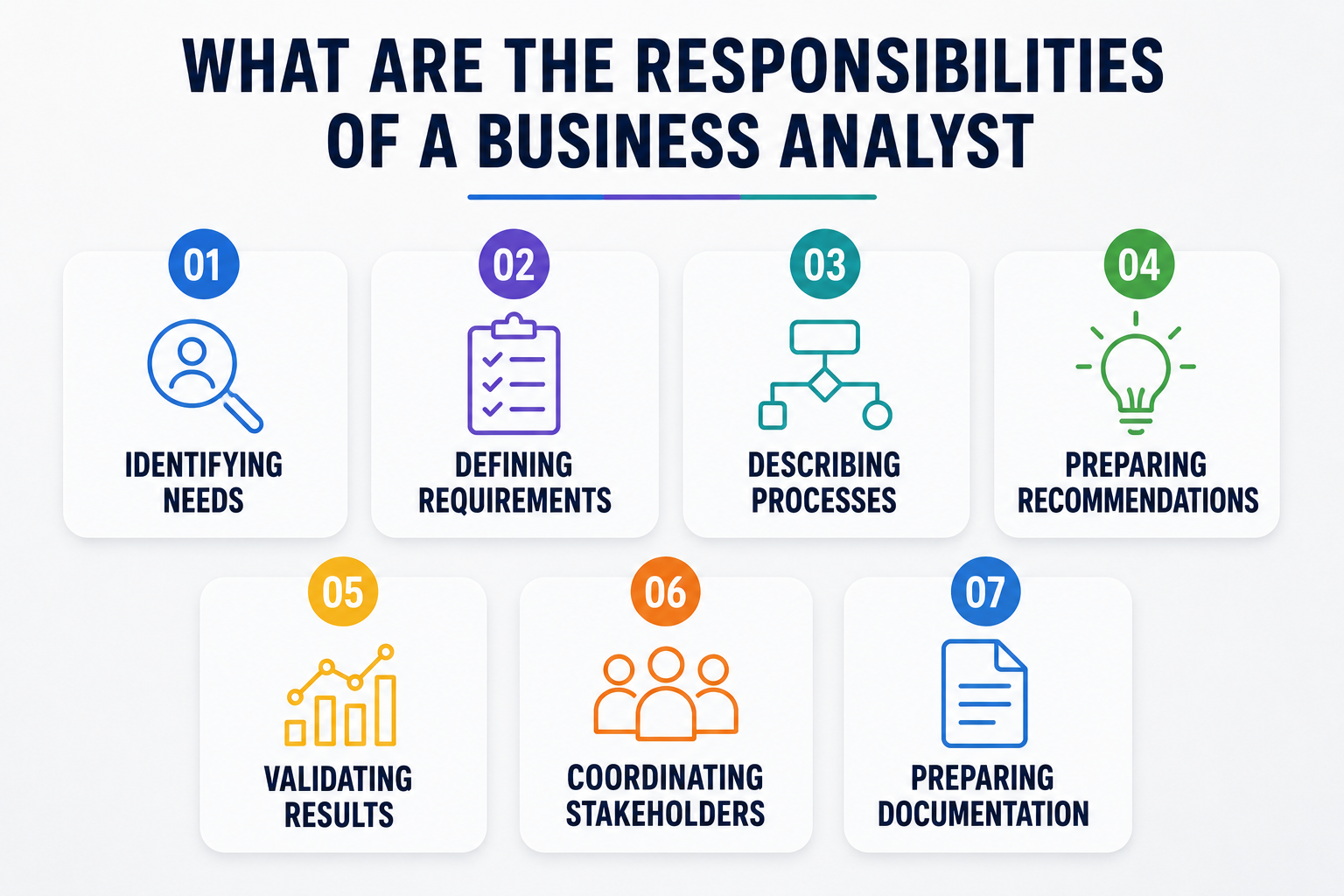
1. Identifying needs
The initial stage involves gathering information through interviews, meetings, document review, and observing department activities. This helps determine the real goals and expectations of stakeholders.
2. Formulating requirements
The gathered information is structured, clarified, and standardized. If necessary, contradictions are resolved, and priority tasks are identified.
3. Describing processes
To visually represent the current situation, analysts use charts, diagrams, and models that help reveal growth opportunities and potential improvements.
Preparing recommendations
After studying the situation, proposals are formed to increase efficiency and achieve set goals.
1. Verifying results
In the final stages, analysts check that the implemented changes meet the agreed-upon expectations and produce the desired effect.
2. Coordinating stakeholders
The specialist interacts with managers, clients, developers, testers, and end-users.
3. Preparing documentation
Responsibilities include creating technical specifications, user stories, feature descriptions, and other work materials.
What skills are necessary
For those interested in how to become a business analyst, it’s crucial to understand that success requires a combination of logical thinking, business communication, and an understanding of the digital environment.

1. A systematic approach
This allows you to work with large amounts of information, find interconnections, and make well-founded decisions.
2. Problem-solving skills
It’s important to understand the root causes of difficulties and select the best ways to resolve them.
3. Clear communication
You must be able to explain complex things in simple terms and ensure mutual understanding among all process participants.
4. Interpersonal skills
The ability to negotiate, build trust, and find compromises plays an important role in almost any work situation.
5. Technological understanding
It’s helpful to be familiar with information systems, data processing tools, and modern digital platforms.
6. Working with visual models
Creating charts and diagrams helps explain complex concepts faster and identify weaknesses in current approaches.
7. Formalizing requests
Properly documenting stakeholder expectations helps reduce the number of errors and revisions in later stages.
How much do business analysts earn
Income depends on experience, region, industry, and the employer’s level. According to job postings and labor market analysis, entry-level employees typically earn $900–1,500 per month.
Mid-level specialists can expect an income of $1,900–3,100 per month. For experienced experts and heads of analytical departments, salaries often range from $3,100–5,000+ per month, especially in large IT companies, banks, and the fintech sector.
How to enter the profession
There are several common ways to start a career in this field.
1. Get relevant training
A good foundation would be a degree in a field related to economics, management, business informatics, or information technology.
2. Gain practical experience
Internships, participation in case studies, and entry-level positions where you can gain your first real-world skills are very important.
3. Validate your qualifications
International certifications, including CBAP and ECBA, can be an additional advantage.
4. Is this profession in demand
The demand for such specialists remains high. Companies are increasingly using analytics, automation, and modern technologies.
Therefore, new vacancies regularly appear for people who can connect business goals with practical tools and support changes at all stages of implementation.
A step-by-step plan on how to become a business analyst from scratch
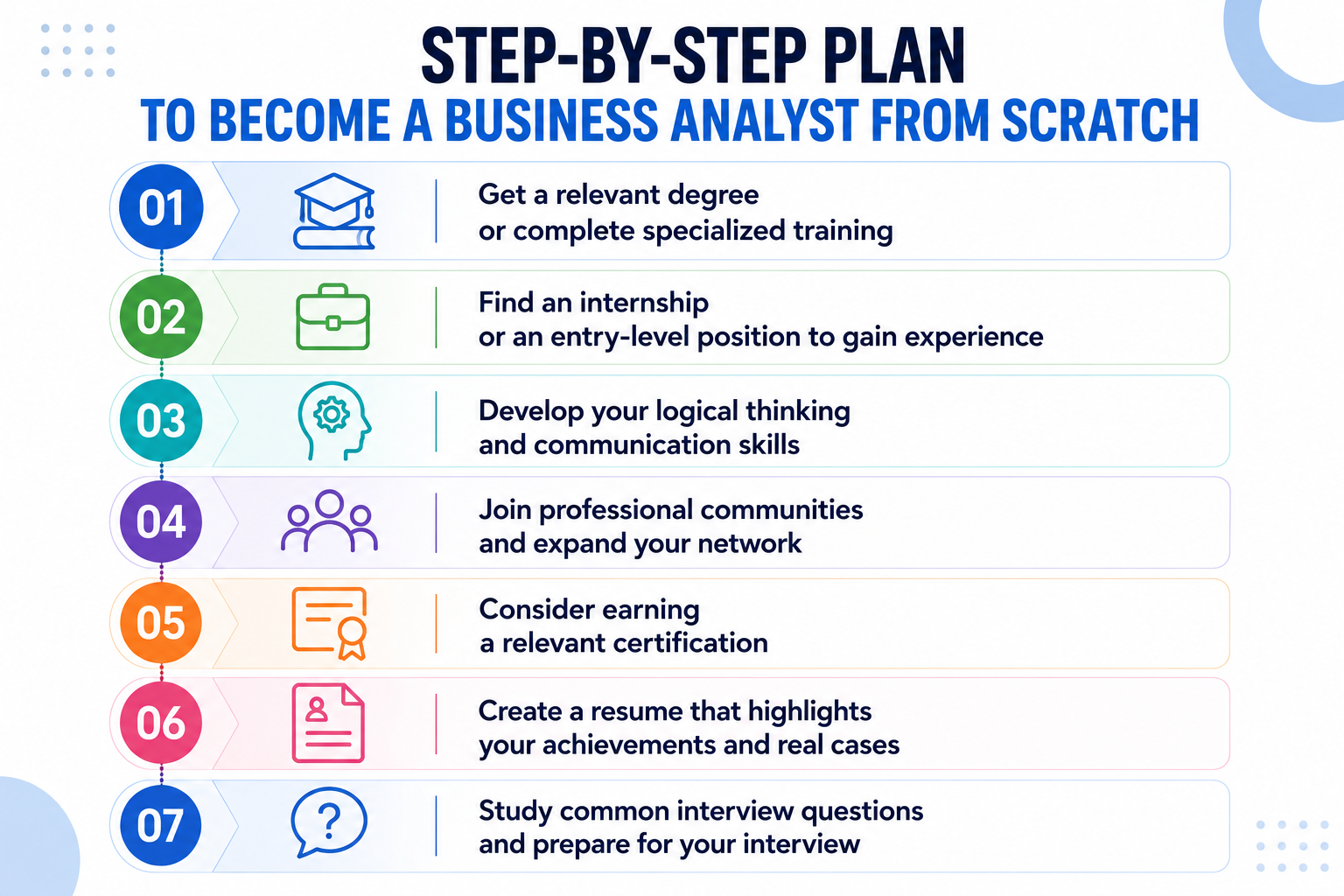
- Get a relevant degree or complete specialized training.
- Find an internship or an entry-level position to gain practical experience.
- Develop your logical thinking and communication skills.
- Participate in professional communities and expand your network of useful contacts.
- Consider obtaining a professional certification.
- Prepare a resume with an emphasis on real achievements and completed projects.
- Study typical employer questions and prepare for interviews in advance.
This profession is suitable for people who are interested in understanding how companies work, working with information, communicating with different teams, and participating in the development of major initiatives.
It opens up good growth prospects and allows you to influence important decisions within the business.